
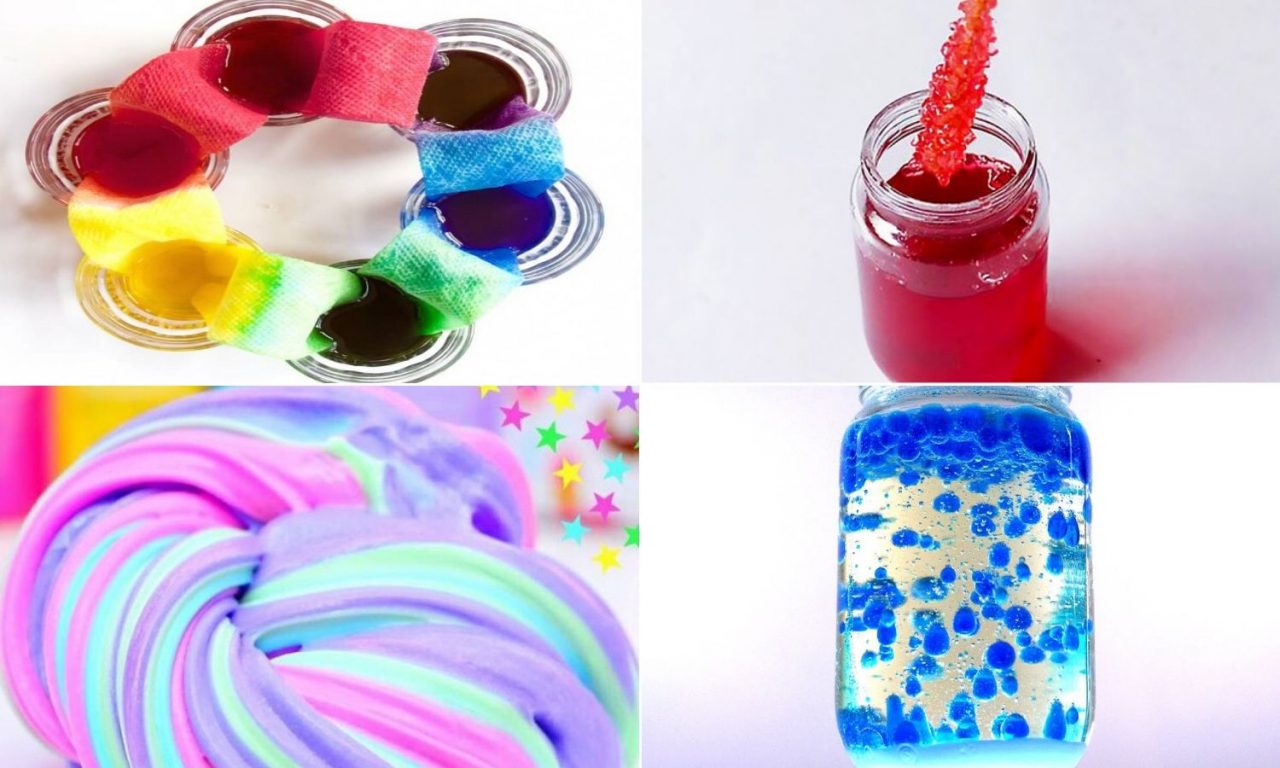
Introducing children to science at home can be both educational and fun. With simple household items, kids can perform experiments that spark curiosity, develop critical thinking, and make learning hands-on. These easy science experiments encourage observation, creativity, and problem-solving skills, making science exciting without the need for expensive lab equipment. In this guide, we’ll explore safe, engaging experiments suitable for children of various ages.
1. Baking Soda and Vinegar Volcano
Materials: Baking soda, vinegar, food coloring, a small container.
Instructions:
-
Place baking soda in the container.
-
Add a few drops of food coloring.
-
Pour vinegar slowly over the baking soda and watch it fizz.
Learning Outcome: Kids observe chemical reactions, gas formation, and basic acid-base interactions.
2. Rainbow in a Glass
Materials: Honey, dish soap, water, vegetable oil, food coloring, a tall glass.
Instructions:
-
Pour each liquid into the glass carefully, starting with the densest (honey) to the lightest (oil).
-
Add food coloring to separate layers for a rainbow effect.
Learning Outcome: Demonstrates density and immiscible liquids in a visually engaging way.
3. Walking Water Experiment
Materials: 3–4 glasses, water, food coloring, paper towels.
Instructions:
-
Fill alternate glasses with colored water.
-
Place empty glasses between them.
-
Fold paper towels into strips and connect the glasses.
-
Watch as water “walks” through the paper towels into empty glasses.
Learning Outcome: Teaches capillary action and absorption.
4. Homemade Lava Lamp
Materials: A clear bottle, vegetable oil, water, food coloring, Alka-Seltzer tablet.
Instructions:
-
Fill the bottle with 2/3 oil and 1/3 water.
-
Add food coloring drops to the water.
-
Break an Alka-Seltzer tablet and drop it in to see bubbling motion.
Learning Outcome: Explains density differences and chemical reactions producing gas bubbles.
5. Balloon-Powered Car
Materials: Balloon, straws, bottle caps, tape, cardboard.
Instructions:
-
Create a small car with cardboard and wheels using bottle caps.
-
Attach a straw and tape a balloon to it.
-
Inflate the balloon and release to propel the car forward.
Learning Outcome: Introduces propulsion, air pressure, and Newton’s laws of motion.
6. Static Electricity Butterfly
Materials: Tissue paper, balloon, scissors, tape.
Instructions:
-
Cut a butterfly shape from tissue paper.
-
Tape the butterfly to a surface lightly.
-
Rub a balloon on your hair and bring it close to the butterfly.
-
Watch the butterfly “fly” toward the balloon.
Learning Outcome: Demonstrates static electricity and attraction forces.
7. Invisible Ink
Materials: Lemon juice, paper, cotton swab, heat source (like a lamp).
Instructions:
-
Dip the cotton swab in lemon juice and write a message on paper.
-
Let it dry completely.
-
Hold near heat to reveal the hidden message.
Learning Outcome: Explains oxidation and chemical reactions producing visible changes.
8. Egg in Vinegar (Naked Egg)
Materials: Egg, vinegar, jar.
Instructions:
-
Place an egg in vinegar and leave it for 24–48 hours.
-
Observe the shell dissolving and leaving a soft, bouncy egg.
Learning Outcome: Demonstrates chemical reactions (acid dissolving calcium carbonate) and osmosis.
9. Homemade Slime
Materials: White glue, baking soda, contact lens solution, food coloring.
Instructions:
-
Mix glue and a small amount of baking soda.
-
Add food coloring.
-
Add contact lens solution gradually while stirring until slime forms.
Learning Outcome: Introduces polymers, viscosity, and chemical bonding.
10. Color Mixing with Milk
Materials: Plate, milk, food coloring, dish soap, cotton swab.
Instructions:
-
Pour milk onto the plate.
-
Add drops of food coloring.
-
Dip the cotton swab in dish soap and touch it to the milk.
-
Watch the colors swirl magically.
Learning Outcome: Teaches surface tension and the effect of soap on molecules.
Tips for Safe Science Experiments at Home
-
Always supervise young children during experiments.
-
Use non-toxic household items wherever possible.
-
Wear protective gear like gloves or aprons if needed.
-
Conduct experiments in a clean, open space to avoid spills.
-
Encourage kids to record observations in a notebook to promote scientific thinking.
FAQs
1. What age group are these experiments suitable for?
Most experiments are suitable for children aged 5 and up, with supervision for younger kids.
2. Do I need special lab equipment?
No. All experiments use common household items and simple materials.
3. Can these experiments be done in small spaces?
Yes. A kitchen counter, table, or safe floor space is enough for most activities.
4. How do I make experiments educational as well as fun?
Ask questions, encourage predictions, and have children record results or explain observations.
5. Can older kids also enjoy these experiments?
Yes. Older children can explore variations, modify experiments, or understand the science behind reactions more deeply.
Conclusion
Easy science experiments using household items make learning fun, engaging, and hands-on. From chemical reactions and physics demonstrations to sensory and creative experiments, children can explore fundamental scientific concepts while developing curiosity, critical thinking, and problem-solving skills. By incorporating these simple experiments into daily routines, parents and teachers can inspire a love for science, promote active learning, and create memorable educational experiences—all without leaving the home or needing expensive materials. Science is everywhere, and with a little imagination, everyday items can turn into tools for discovery.

